


Curtain Wall Systems
Alutech AIS specializes in the design, fabrication, and installation of advanced
Curtain Wall Systems that provide both aesthetic and functional benefits for modern buildings. These systems are an essential component of contemporary architecture, offering a sleek, seamless exterior while enhancing the building’s overall performance.
1. Definition and Purpose
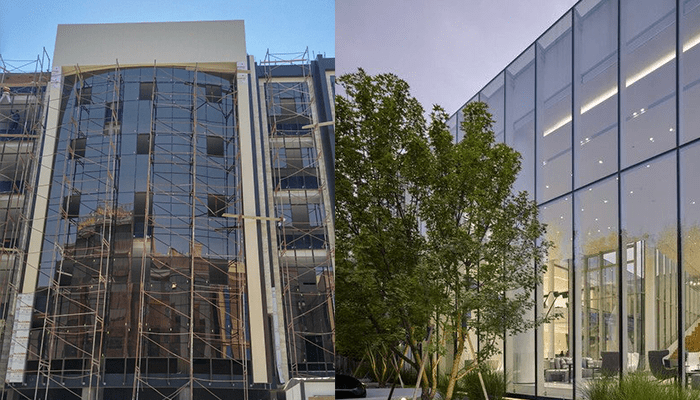
A curtain wall is a non-structural outer covering of a building, typically made of lightweight materials such as glass, aluminum, or stone veneer. Unlike traditional walls, curtain walls do not carry any load other than their own weight. Instead, they are attached to the building’s structural frame and act as a shield, protecting the interior from external elements while allowing natural
2. Types of Curtain Walls
- Stick System: In this system, components are assembled piece by piece on-site. It allows for flexibility during installation and is ideal for small to medium-sized projects.
- Unitized System: Prefabricated units are assembled in a factory and then shipped to the site for installation. This system is faster to install and ensures higher precision and quality control.
- Semi-Unitized System: A combination of both stick and unitized systems, this approach involves partial assembly in the factory and final assembly on-site.
3. Materials Used
- Glass: The most common material, offering transparency, light transmission, and energy efficiency. Various types of glass, including tempered, laminated, and insulated, are used depending on the project’s requirements.
- Aluminum: Used for framing, aluminum is lightweight, durable, and corrosion-resistant. It supports the glass panels and provides structural integrity to the curtain wall.
- Steel: Occasionally used for structural support, especially in larger or more complex curtain wall systems.
4. Benefits of Curtain Wall Systems
- Aesthetic Appeal: Curtain walls create a sleek and modern look, with the ability to cover large areas in glass, giving buildings a unique and striking appearance.
- Natural Light and Views: By maximizing the use of glass, curtain walls allow for abundant natural light and unobstructed views, improving the interior environment and reducing the need for artificial lighting.
- Weather Resistance: Curtain walls act as a barrier against external elements such as wind, rain, and temperature fluctuations. They are designed to resist air and water infiltration, ensuring a comfortable and dry interior.
- Energy Efficiency: Modern curtain walls are equipped with thermal breaks and insulated glazing, which improve energy efficiency by reducing heat loss in winter and heat gain in summer. This contributes to lower energy costs and a smaller environmental footprint.
- Structural Load Reduction: Since curtain walls are non-load-bearing, they reduce the overall structural load on the building, allowing for more flexible and innovative architectural designs.
5. Installation Process
- Design and Planning: A thorough analysis of the building’s structure and requirements is conducted to design a curtain wall system that meets both aesthetic and functional needs.
- Fabrication: The components of the curtain wall, including frames and glass panels, are fabricated with precision in a controlled environment.
- Site Preparation: The building’s structural frame is prepared to receive the curtain wall. This may involve adjustments to the frame or the installation of additional support brackets.
- Installation: The curtain wall is assembled and installed on-site. For unitized systems, large sections are hoisted into place and secured to the building’s frame.
- Sealing and Finishing: Joints and seams are sealed to ensure weather-tightness, and any finishing touches are applied to complete the installation.
6. Applications
- Commercial Buildings: Office towers, shopping malls, and hotels commonly use curtain walls to create a professional and modern facade.
- High-Rise Residential: Curtain walls are also popular in residential skyscrapers, where they enhance the building’s appearance and provide residents with expansive views.
- Institutional Buildings: Universities, hospitals, and government buildings use curtain walls for their combination of durability, aesthetics, and energy efficiency.
7. Customization Options
- Glass Tints and Coatings: Different tints and coatings can be applied to the glass to control heat gain, glare, and privacy.
- Frame Colors and Finishes: Aluminum frames can be anodized or powder-coated in a variety of colors and finishes to match the building’s design theme.
- Integrated Sunshades and Louvers: For added energy efficiency and comfort, sunshades, louvers, and other shading devices can be integrated into the curtain wall design.