


Automatic Sliding Doors
Automatic sliding doors are widely used in commercial, residential, and industrial buildings for their convenience, efficiency, and aesthetic appeal. These doors open and close automatically without physical contact, offering hands-free access, enhanced safety, and energy efficiency. They are commonly seen in high-traffic areas such as shopping malls, hospitals, airports, office buildings, hotels, and more, where ease of access and traffic flow are critical.
Key Features and Benefits of Automatic Sliding Doors
Hands-Free Operation
Automatic Activation: Sliding doors open and close automatically using sensors, buttons, or access control systems. This feature provides ease of access, particularly beneficial in healthcare facilities, supermarkets, and areas where people often carry bags or use wheelchairs.
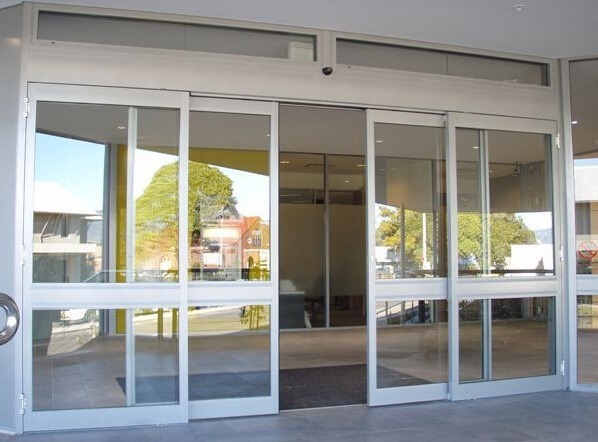
Improved Accessibility
Convenient for All Users: Automatic sliding doors enhance accessibility for all users, including those with disabilities, the elderly, and children, complying with ADA (Americans with Disabilities Act) standards and other local accessibility regulations.
Energy Efficiency
Reduced Air Infiltration: The doors open only when needed, reducing air infiltration and maintaining indoor temperature stability. This helps in minimizing heating and cooling costs, leading to better energy management and sustainability.
Intelligent Sensors: Equipped with advanced sensors that detect motion or presence, these doors optimize opening and closing times, further enhancing energy savings.
Enhanced Safety and Security
Safety Sensors: Modern automatic sliding doors are fitted with sensors that detect obstacles in their path, preventing the doors from closing if a person or object is detected. This ensures safe operation and minimizes the risk of accidents.
Access Control Integration: Automatic sliding doors can be integrated with access control systems like key cards, biometric scanners, or facial recognition systems, offering enhanced security and controlled access to restricted areas.
Space-Saving Design
Minimal Footprint: Sliding doors are an excellent choice for buildings with limited space since they do not require extra room to swing open or closed. They slide parallel to the wall, maximizing usable floor space and minimizing congestion.
Aesthetic Appeal
Modern and Sleek Look: Automatic sliding doors are available in various styles, materials, and finishes, adding a modern and sleek appearance to any building. Glass sliding doors, in particular, create a welcoming and open environment, improving natural light flow.
Versatility in Applications
Suitable for Various Environments: These doors are highly versatile and suitable for various settings, including commercial, industrial, residential, healthcare, and hospitality sectors. Customization options allow for tailored solutions based on specific requirements and aesthetic preferences.
Quiet Operation
Low Noise Levels: Automatic sliding doors are designed for quiet operation, making them ideal for environments where noise reduction is crucial, such as hospitals, libraries, and offices.
Components of Automatic Sliding Doors
Door Panels
Material Options: The door panels can be made of glass, aluminum, steel, or wood, depending on the application and aesthetic requirements. Glass panels are popular for their transparency and modern look.
Sliding Mechanism
Guide Rails and Tracks: The sliding mechanism consists of guide rails and tracks that facilitate the smooth and controlled movement of the door panels. These components are designed for durability and reliability.
Sensors
Motion and Presence Sensors: The sensors detect approaching individuals or objects and trigger the door to open or close. Infrared sensors, microwave sensors, or a combination of both are commonly used to enhance responsiveness and safety.
Control Unit
Centralized Control System: The control unit manages the door’s operations, receiving signals from sensors and controlling the motor to open or close the doors. It may also integrate with access control systems and emergency controls.
Motor and Drive System
Electric Motor: The motor provides the power needed to move the door panels. It is usually a low-voltage, high-torque electric motor that ensures smooth and reliable operation.
Drive Belt: The drive belt connects the motor to the door panels, translating the motor’s power into movement.
Safety Features
Obstacle Detection Systems: Advanced automatic sliding doors include safety features like obstacle detection systems that stop or reverse the door’s movement if an object is detected in its path.
Emergency Release Mechanism: An emergency release feature allows manual operation of the doors in the event of a power failure or emergency, ensuring safety and compliance with building codes.
Types of Automatic Sliding Doors
Single Slide Doors
One Panel Sliding: Single slide doors consist of one movable panel that slides in one direction (left or right) and one fixed panel. They are commonly used in locations with limited wall space on one side.
Bi-Parting Doors
Two Panels Sliding Apart: Bi-parting sliding doors have two panels that slide in opposite directions, providing a wider opening. They are ideal for high-traffic areas where large openings are required.
Telescopic Sliding Doors
Multiple Panels Sliding Sequentially: Telescopic sliding doors consist of multiple panels that slide together in a telescopic manner, allowing for a larger opening in a limited space. They are ideal for locations with narrow entry points but require a wide opening.
Curved Sliding Doors
Curved Track Design: Curved sliding doors follow a curved track, offering an elegant and stylish appearance. They are often used in hotels, shopping malls, and high-end commercial buildings to create a distinctive entrance.
Breakout Sliding Doors
Emergency Exit Capability: Breakout sliding doors can swing open manually in case of an emergency, such as a fire, providing a quick and safe exit route. They are commonly used in healthcare facilities and large public buildings.
Hermetic Sliding Doors
Sealed for Controlled Environments: Hermetic sliding doors are designed to create an airtight seal, making them suitable for cleanrooms, laboratories, and medical facilities where controlled environments are required.
Considerations for Choosing Automatic Sliding Doors
Location and Purpose
Determine the location and primary purpose of the door (e.g., main entrance, interior passage, restricted area). The choice of door type and features will vary based on these factors.
Traffic Flow and Usage
Assess the volume of foot traffic and the frequency of door usage. High-traffic areas may require more robust doors with heavy-duty components, while low-traffic areas may use lighter, simpler designs.
Safety and Compliance
Ensure that the automatic sliding doors meet safety standards and building codes, including emergency access and fire safety requirements.
Customization and Aesthetic Preferences
Consider the door’s design, materials, and finish to match the building’s architecture and interior design. Options such as frameless glass, colored or tinted glass, and custom etching can add visual appeal.
Integration with Building Systems
Choose doors that can integrate with existing building management systems, such as access control, security alarms, and emergency response systems.
Energy Efficiency
Opt for energy-efficient doors with proper insulation and sealing to minimize energy loss and improve indoor climate control.
Cost and Maintenance
Evaluate the initial installation cost, long-term maintenance requirements, and operational efficiency to ensure cost-effectiveness over the door’s lifespan.
Popular Manufacturers of Automatic Sliding Doors
Assa Abloy Entrance Systems
Known for its durable and high-quality automatic sliding door systems, Assa Abloy offers a range of options suitable for various applications, from commercial to healthcare settings.
Dormakaba
Offers innovative sliding door solutions that integrate with access control and security systems, providing advanced safety and convenience.
Stanley Access Technologies
A leader in automatic door solutions, Stanley Access Technologies provides versatile and reliable sliding door systems with customizable options.
GEZE
Specializes in advanced automatic door systems with intelligent sensor technology, energy efficiency, and safety features.
Horton Automatics
Provides a range of automatic sliding doors known for their energy efficiency, durability, and smooth operation, suitable for various commercial and industrial settings.